
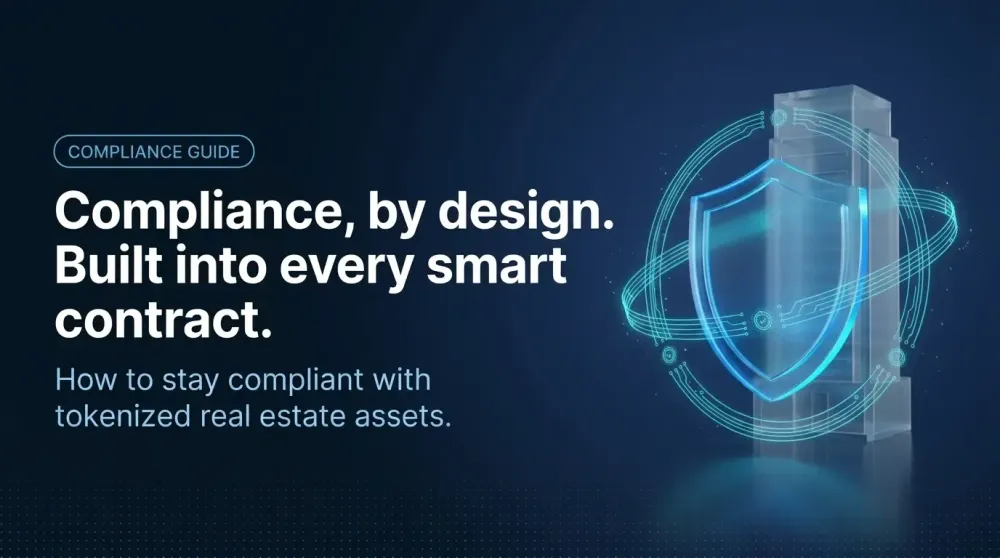
How to stay compliant with blockchain-tokenized real estate assets
Blockchain-tokenized real estate assets offer unprecedented access to fractional ownership and a fluid distribution layer, but they come with complex compliance obligations that can overwhelm even experienced participants. As regulatory guidance for digital securities frameworks evolves, understanding how to navigate federal securities laws, multi-jurisdictional requirements, and emerging blockchain regulations is critical to avoiding enforcement actions and protecting your allocations. This guide provides actionable steps to help you prepare for, execute, and maintain compliant participations in blockchain-tokenized assets while minimizing legal risk and capturing the benefits of this transformative asset class.
Table of Contents
- Key takeaways
- Preparing for compliance: key requirements and frameworks
- Step-by-step guide to executing compliant participations
- Common compliance pitfalls and how to avoid them
- Verifying compliance and ensuring ongoing regulatory adherence
- Trusted solutions for compliant blockchain-tokenized allocations
- Frequently asked questions
Key Takeaways
- Howey classification — Blockchain-tokenized real estate units are typically securities under federal law and may require SEC registration unless an exemption applies.
- Compliance by design — Platforms should embed compliance controls into smart contracts so participant eligibility and transfer restrictions are automated.
- Multi-jurisdiction rules — Regulatory requirements differ by jurisdiction but commonly require geofencing and automated controls to meet securities laws.
- Custody and audits — Proper custody, ongoing monitoring, and regular smart-contract audits reduce risk for issuers and participants.
Preparing for compliance: key requirements and frameworks
Before you allocate to blockchain-tokenized real estate, you need to understand the legal foundation governing these assets. Most blockchain-tokenized property units satisfy the Howey Test, which means they're classified as securities under federal law.
This classification triggers registration requirements with the SEC unless the offering qualifies for an exemption like Regulation D or Regulation A+. Failing to verify this status can expose you to unregistered securities and potential legal liability.
Coordination models vary significantly in their compliance complexity. Issuer-sponsored models involve the property owner directly fractionalizing their asset, maintaining full control over issuance and compliance. Third-party models split into custodial arrangements, where a regulated entity holds the underlying asset, and synthetic models, where units represent derivative exposure rather than direct ownership. Each model carries distinct regulatory obligations, custody requirements, and participant protections.
Understanding which model you're engaging with helps you assess the compliance burden and risk profile accurately.
Regulatory frameworks differ by jurisdiction but share core securities-law principles. In the United States, federal securities laws dominate, supplemented by state blue-sky laws. The European Union's MiCA framework introduces comprehensive rules for digital units.
The UAE's Virtual Assets Regulatory Authority creates a progressive framework for blockchain-tokenized securities. Despite geographic differences, all frameworks emphasize participant protection, disclosure requirements, anti-money-laundering controls, and integrity of the distribution layer.
Pro tip: choose platforms leveraging standards like ERC-3643 for institutional-grade compliance and efficiency. This standard embeds compliance rules directly into smart contracts, automating participant-eligibility checks, transfer restrictions, and regulatory reporting. By selecting platforms built on recognized standards, you reduce manual compliance overhead and gain confidence that the infrastructure meets evolving regulatory expectations. The preparation phase also involves understanding the specific exemptions your participation relies on. Regulation D offerings under Rule 506(b) or 506(c) allow private placements to accredited participants without full SEC registration, but they impose strict advertising and solicitation limits.
Regulation A+ permits limited public offerings up to $75 million annually with reduced disclosure requirements compared to full registration. Each exemption carries specific conditions, and violating them can invalidate the exemption, exposing issuers and potentially participants to enforcement actions. Always confirm which exemption applies and verify the issuer's compliance with its terms before committing capital.
- Federal securities compliance
- Registration path: Full SEC registration
- Exemption path: Reg D (accredited only) or Reg A+ (limited public)
- Token model consideration: Issuer-sponsored requires direct compliance
- Platform licensing
- Registration path: Broker-dealer and ATS registration
- Exemption path: No distribution-layer facilitation
- Token model consideration: Third-party custodial needs a regulated intermediary
- Participant verification
- Registration path: KYC/AML for all participants
- Exemption path: Accredited-participant verification for Reg D
- Token model consideration: Synthetic models may have additional derivative rules
- Ongoing disclosure
- Registration path: Periodic reporting like traditional securities
- Exemption path: Limited disclosure for private placements
- Token model consideration: All models require some level of transparency
Step-by-step guide to executing compliant participations
Once you understand the regulatory landscape, executing a compliant participation requires methodical verification at every stage. Follow these steps to protect yourself legally and financially. Verify the legal status of the unit and issuer.
Confirm whether the unit is registered with the SEC or relies on an exemption. Request the offering documents, including the private placement memorandum or offering circular. Review the issuer's legal structure, ownership of the underlying property, and any liens or encumbrances. Check that the unit's terms match the legal agreements and that the issuer has proper title to the real estate. This foundational step prevents allocating to fraudulent or improperly structured offerings.
Confirm platform registrations and intermediary licenses. If the platform facilitates distribution-layer transfers of units, it likely must register as a broker-dealer (the SEC's defined intermediary category) under federal law. Verify the platform's registration status through FINRA's BrokerCheck system. Check whether the platform operates as an ATS, which requires additional SEC registration. Unregistered platforms conducting regulated activities expose you to enforcement risks and potential loss of allocation if the platform is shut down. Don't assume compliance, demand proof of registration, and review the platform's regulatory history.
Ensure the platform uses safe custody solutions and audited smart contracts. Custody of blockchain-tokenized assets involves both the on-chain units and the legal rights to the underlying property. Verify that a qualified custodian holds the property title or that robust legal mechanisms tie unit ownership to property rights. Review smart-contract audit reports from reputable firms to confirm the code functions as intended without vulnerabilities. Check whether the platform uses multi-signature wallets, cold storage, or other security measures to protect digital units. Poor custody or buggy smart contracts can result in theft, loss, or disputes over ownership.
Understand geofencing and AML controls to comply with jurisdictional limits. Many blockchain-tokenized offerings restrict participation by geography to comply with local securities laws. Verify that the platform implements geofencing technology to block transactions from prohibited jurisdictions. Confirm the platform conducts know-your-customer checks and screens against sanctions lists. Understand how the platform monitors transactions for suspicious activity and reports to authorities. Weak AML controls can implicate you in money-laundering investigations even if you acted innocently.
Maintain documentation and comply with ongoing disclosure requirements. Keep copies of all offering documents, subscription agreements, and transaction confirmations. Track your cost basis, distributions received, and any tax-reporting forms issued. Monitor the issuer's ongoing disclosures, including financial statements, property updates, and material-event notifications. Set up alerts for regulatory filings related to your allocation. Proper documentation protects you in disputes and ensures accurate tax reporting. Failing to track ongoing disclosures can leave you blindsided by adverse developments.
Pro tip: conduct continuous monitoring to detect regulatory changes or compliance gaps early. Subscribe to SEC alerts, join industry associations, and engage legal counsel familiar with blockchain-tokenized securities. Regulatory guidance evolves rapidly, and staying informed allows you to adjust your compliance practices proactively. Platforms and issuers may also experience compliance drift over time, so periodic reviews of their regulatory status and operational practices help you identify risks before they materialize into losses or legal exposure.
Common compliance pitfalls and how to avoid them
Even diligent participants make mistakes when navigating compliance for blockchain-tokenized assets. Recognizing common pitfalls helps you avoid costly errors and enforcement actions.
Unregistered distribution-layer activity represents one of the most frequent violations. Many participants assume that once they acquire a unit, they can freely re-transfer it on any platform or peer-to-peer. However, distribution layers pose unique compliance challenges because resales of securities must occur through registered broker-dealers (the SEC license category) or on exempt platforms.
Moving units on unregistered decentralized venues or through informal channels violates securities laws. Always verify that any distribution-layer platform you use is properly registered or qualifies for an exemption before initiating transfers.
AML blind spots in permissionless blockchain transfers create significant risks. While the initial offering may include robust KYC and AML checks, subsequent transfers on public blockchains can bypass these controls. Units may pass through multiple wallets, mixing with funds from sanctioned entities or illicit sources. Regulators increasingly hold platforms, and even participants, accountable for inadequate transaction monitoring. Ensure the platform implements on-chain analytics to detect suspicious patterns and block transfers to prohibited addresses. Avoid platforms that allow unrestricted peer-to-peer transfers without ongoing monitoring.
DAO governance risks related to decentralized ownership and control complicate compliance. Some blockchain-tokenized real estate projects use decentralized autonomous organizations to manage properties or make allocation decisions. While DAOs offer transparency and community governance, they create legal ambiguity around liability, regulatory obligations, and participant protections.
If the DAO structure doesn't clearly assign compliance responsibilities, regulatory obligations may go unmet. Verify that the DAO has a legal wrapper, such as a limited liability company, that assigns fiduciary duties and compliance obligations to identifiable parties. Avoid purely decentralized structures lacking legal accountability.
Cross-border regulatory conflicts arise when units are accessible globally but subject to conflicting local laws. A unit compliant in the United States may violate securities laws in Europe or Asia. Platforms must implement geofencing to restrict access by jurisdiction, but technical failures or VPN usage can circumvent these controls. Understand which jurisdictions permit your participation and avoid using technical workarounds to access restricted offerings. Violating foreign securities laws can result in enforcement actions, asset seizures, or criminal liability in those jurisdictions.
Non-compliance carries high enforcement risks, including SEC penalties, participant lawsuits, and potential criminal charges. The evolving regulatory landscape demands proactive adherence to securities laws and continuous monitoring to avoid violations that can result in substantial financial and reputational damage.
Verifying compliance and ensuring ongoing regulatory adherence
Compliance isn't a one-time checkbox but an ongoing obligation throughout your allocation lifecycle. As regulatory frameworks evolve to recognize and regulate blockchain-tokenized assets, maintaining adherence requires active monitoring and adaptation.
Regional regulatory frameworks differ significantly in their approach to blockchain-tokenized assets. Understanding these differences helps you assess compliance requirements for cross-border allocations.
- United States
- Key regulation: Securities Act, UCC Article 12
- Registration requirement: SEC registration or exemption
- Custody rules: Qualified custodian for securities
- Cross-border considerations: Strict enforcement, limited foreign-issuer access
- European Union
- Key regulation: MiCA, MiFID II
- Registration requirement: Crypto-asset service provider license
- Custody rules: Segregated custody with authorized providers
- Cross-border considerations: Passporting within EU, third-country restrictions
- United Arab Emirates
- Key regulation: VARA framework
- Registration requirement: Virtual asset license in ADGM or DIFC
- Custody rules: Licensed custodian with local presence
- Cross-border considerations: Progressive rules, attracting international issuers
Ongoing disclosure and reporting obligations continue after your initial allocation. Issuers must provide periodic financial statements, property valuations, and updates on material events affecting the position. Platforms must maintain transaction records and report suspicious activity to authorities. As a participant, you must track these disclosures and report distributions accurately on tax filings. Missing disclosures or failing to report can trigger audits, penalties, or disputes with tax authorities.
Automated compliance monitoring tools and smart-contract audits provide ongoing assurance. Many platforms now offer dashboards tracking regulatory status, custody arrangements, and transaction monitoring alerts. Smart contracts with embedded compliance rules automatically enforce transfer restrictions, participant eligibility, and reporting requirements.
Regular audits by independent firms verify that these automated systems function correctly and adapt to regulatory changes. Use these tools to reduce manual compliance work and catch issues early.
Maintaining communication with regulators and updating policies per new rules ensures you stay ahead of enforcement. Regulators increasingly engage with blockchain-tokenized platforms through no-action letters, interpretive guidance, and pilot programs. Platforms that proactively seek regulatory input and adjust their practices accordingly demonstrate good-faith compliance. As a participant, favor platforms with strong regulatory relationships and track records of adapting to new requirements. This proactive stance reduces the risk of sudden enforcement actions that could disrupt your position.
Subscribe to regulatory alerts from the SEC, FINRA, and relevant international authorities to stay informed of guidance updates.
Conduct annual reviews of platform compliance status, including registration renewals and audit reports.
Maintain relationships with legal and tax advisors specializing in blockchain-tokenized securities for ongoing consultation.
Participate in industry associations and working groups to influence regulatory development and share best practices.
Document all compliance-verification steps and maintain an audit trail for potential regulatory inquiries.
Implement portfolio-wide monitoring systems that aggregate compliance data across multiple blockchain-tokenized allocations.
Establish escalation procedures for addressing compliance gaps or regulatory changes affecting your holdings.
Trusted solutions for compliant blockchain-tokenized allocations
Navigating the complex compliance landscape for blockchain-tokenized real estate requires robust infrastructure built with regulatory adherence at its core. Mey Network provides a comprehensive platform designed to simplify compliance while offering participants seamless access to blockchain-tokenized real estate opportunities. Our ecosystem integrates compliance-by-design principles, leveraging purpose-built blockchain technology and institutional-grade security to ensure every transaction meets evolving regulatory standards.
Whether you're an institutional participant seeking diversified real estate exposure or an individual looking to access fractional ownership opportunities, Mey Network delivers the transparency, security, and regulatory clarity you need. Explore how our platform combines innovative blockchain technology with rigorous compliance frameworks to transform your real estate participation strategy while protecting your interests in this dynamic regulatory environment.
Frequently asked questions
What is a blockchain-tokenized asset, and how is it regulated?
A blockchain-tokenized asset is a digital representation of ownership in a real-world asset, such as real estate, recorded on a blockchain. These units typically qualify as securities under the Howey Test, triggering federal securities laws that require registration with the SEC or qualification for an exemption. Regulation includes mandatory disclosures, anti-money-laundering controls, participant-eligibility verification, and ongoing reporting obligations. Platforms facilitating these transactions must often register as broker-dealers (the SEC license category) or ATS venues to comply with securities laws.
How can investors confirm a platform handling blockchain-tokenized real estate is compliant?
Participants should verify the platform's registration status through FINRA's BrokerCheck system and confirm whether it operates as a registered broker-dealer or an ATS. Review the platform's custody arrangements to ensure a qualified custodian holds the underlying assets or legal rights. Examine smart-contract audit reports from reputable security firms to confirm code integrity. Check that the platform implements robust KYC, AML, and geofencing controls to comply with multi-jurisdictional requirements and prevent prohibited transactions.
What are common compliance risks in cross-border blockchain-tokenized allocations?
Cross-border participations face conflicting regulatory requirements across jurisdictions, requiring platforms to implement geofencing technology that restricts access based on participant location. Different countries apply distinct securities laws, licensing requirements, and protection rules that may conflict. Unregistered distribution-layer activity amplifies enforcement risks because units may move on platforms lacking proper authorization in multiple jurisdictions. Participants using VPNs or other technical workarounds to access restricted offerings expose themselves to foreign enforcement actions and potential asset seizures.
What ongoing obligations do blockchain-tokenized real estate participants face?
Participants must comply with ongoing disclosure and reporting requirements, including accurate reporting of distributions and operational value on tax filings. They should monitor regulatory updates affecting their holdings, changes to securities laws, new guidance from regulators, or modifications to platform compliance status. Maintaining accurate records of all transactions, offering documents, and correspondence is essential for compliance verification during audits or disputes. Participants should also review periodic disclosures from issuers, including financial statements and property updates, to stay informed about material changes affecting their position.
