

Fractional real estate lets you buy into a single property for as little as $10, and in 2026, there are more platforms offering it than ever. Finding one is the easy part. The harder part is working out what you actually get for your money, and how you get that money back out when you want it.
This comparison puts nine platforms through the same four questions: what you legally own, how you sell, who is allowed in, and what you pay in total. Fractional here means a share of one named house, not a fund holding hundreds, and our guide to fractional real estate investing covers the wider category.
We have left projected returns out on purpose. A return figure is the one number a platform writes itself, while holding rules, entry gates, and fees sit on pages you can open and check for yourself. Those are the things we compared.
The nine are grouped by what you end up holding rather than ranked from best to worst, and each one gets a named weakness. That includes Mey Real, which is us. We would rather you compare us on the same terms as everyone else.
Key Takeaways
- Only five of the eight platforms still trading publish a fee schedule you can read before opening an account. The ninth, RealT, is winding down and appears here as a cautionary case rather than an option.
- Arrived changed its exit route. Shares can be sold after a six-month minimum hold, then trade in a monthly window, per Arrived's own help center.
- Minimums run from $10 to $250, and the minimum is the least useful number on a platform's homepage.
Table of Contents
- What does a fractional real estate investment actually give you?
- How did we compare these fractional real estate platforms?
- Which are the 9 best fractional real estate investing platforms in 2026?
- Which fractional real estate platform is best for you?
- What are the challenges and limitations of fractional real estate investing platforms?
- Our perspective
- Frequently asked questions
What Does a Fractional Real Estate Investment Actually Give You?
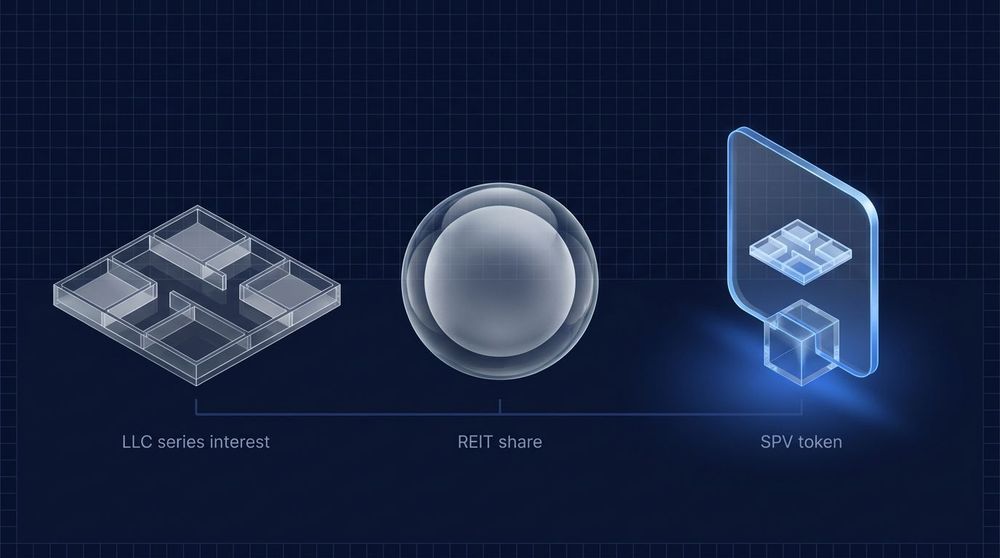
A fractional real estate investment gives you a legal interest in a company that owns a building, never the property itself, and the shape of that interest is the biggest difference between platforms.
A fractional real estate investing platform is an online service that verifies participants, splits a specific property into purchasable units through a legal entity, and records who holds which units. The unit, not the building, is what you buy. Two things get confused with it. A REIT, a listed company owning hundreds of buildings, sells you a share of itself, and a crowdfunding fund pools money across deals nobody lets you pick. Our comparison of real estate crowdfunding vs tokenization walks that boundary, and the REIT side sits in REITs vs tokenized real estate.
Picture a vacation house owned by six families through a company they all belong to. Nobody owns a bedroom. Everybody owns a slice of the company, and a document decides how the rent and the sale price get split. That company is an SPV, short for special purpose vehicle, holding one asset and nothing else.
You own paper. Read the paper.
How Did We Compare These Fractional Real Estate Platforms?
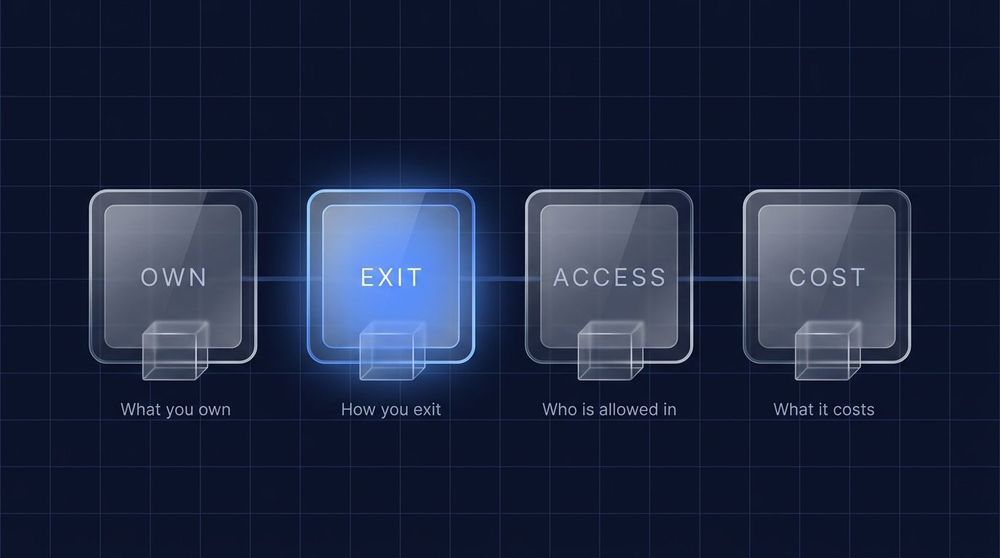
Every name here faced the same four questions. The answers split them.
Criterion 1. What you legally own. Fractional shares of real estate come in three shapes. A slice of a series LLC, one company divided into sealed compartments so one house's debts cannot reach the others. A token recording that same slice on a blockchain. Or a share in a pooled fund such as an eREIT, where your money buys a piece of everything it owns. Each puts a different entity between you and the building, and that entity's failure changes your rights. Compliance is not optional. It is your first line of defense against fraud.
Criterion 2. How you get out. Platforms use one of four answers. A fixed hold period, which works like a fixed-term lease, so wanting out early does not get you out. A redemption window, where the platform buys your shares back at its own valuation rather than a price a buyer agreed. A resale route where you find that buyer yourself. Or nothing at all.
Criterion 3. Who is allowed in. The minimum is the number every platform leads with, and it hides the two gates that matter more, accreditation and geography. Regulation A+ offerings are open to anyone over 18. Regulation D 506(c) offerings are limited to accredited investors, a US label for people earning over $200,000 a year or holding $1 million outside their home, so a reader with $200 is not one. Identity checks, known as KYC, apply either way. On minimum purchase, Fundrise starts at $10, Ark7 near $20 a share, Lofty near $50, Arrived, Realbricks, and Mey Real at $100, and Mogul at $250. For the smallest entry, read our guide to getting into property with little money.
Criterion 4. What it costs all in. Four charges recur. A sourcing fee once for buying the house, an annual asset-management fee, a platform fee per trade, and a fee on the way out. What sorts the field is whether you see all four before you open an account.
Pro tip: Find the fee page and the exit page before you open an account anywhere. If either sits behind a login, that is your answer.
Most roundups lead with a return figure. It is the one number a platform writes itself and the one you cannot verify. Everything else here can be checked against a published page, which is why returns are excluded as policy.
See how a [property token offering](https://meyreal.io) answers these same four questions.
Which Are the 9 Best Fractional Real Estate Investing Platforms in 2026?
Again, these are not ranked. We start with the on-chain platforms, which is the model we build ourselves, and the numbers are labels rather than scores.
On-Chain Fractional Real Estate Platforms
Here the share of the property-holding company is recorded as tokenized units on a blockchain, and the transfer rule sits in code rather than in a form.
1. Mey Real. Mey launched with four properties across Vietnam, the UAE, and France. We built Mey Real for those outside the United States, and for anyone who wants a named property held by a local company with the transfer rules written in code.
- What you own. Each property token offering records economic rights on-chain against a local SPV that holds the title. Our legal framework documentation states that "the token does not convey direct ownership of the land title (which remains with the SPV)."
- How you get out. Our FAQ sets out that units trade freely once received, with no lock-up, and that the code will not move a unit to a wallet that has not cleared KYC. That is a documented transfer path, and as with every platform here, a sale still needs a buyer on the other side.
- Who is allowed in. Anyone worldwide who clears our KYC and anti-money-laundering checks. The code blocks transfers to sanctioned countries, so eligibility rests on identity rather than on where you live.
- What it costs. We have not yet published a single public fee schedule, so the all-in total cannot be checked from outside an account. We are saying that here rather than leaving you to find it out later.
2. Lofty. An on-chain platform recording membership of one-house Wyoming companies from about $50.
- What you own. Your share of a Wyoming company that holds the house sits on a public blockchain, according to a September 2026 review.
- How you get out. A public list of buy and sell offers, plus a pot of Lofty's own money that buys your units immediately at a worse price.
- Who is allowed in. No accreditation needed, most non-sanctioned countries accepted. After a 2022 settlement with California's securities regulator, California residents cannot buy.
- What it costs. Lofty publishes 2.5% to buy and 3% to sell, and an independent review puts a round trip near 8%. No management fee.
3. RealT. On this list as a warning, not a recommendation. It shows what all four criteria look like when a platform fails.
- What happened. RealT put roughly 700 properties, most in Detroit, on-chain and raised about $140 million. Payments to holders had largely stopped by the end of 2025, and Detroit sued over vacant properties and unpaid taxes. A court appointed an administrator in April 2026, and the co-founder announced that the company was closing on July 2, 2026.
Fractional Rental-Home Companies
These three sell a share of one identified US rental house.
4. Arrived. A Regulation A platform selling shares in single-family and vacation rental homes from $100.
- What you own. Shares in the offering, not the house. SEC clearance is what lets ordinary savers in.
- How you get out. Shares in individual homes clear a six-month hold, then trade in a one-week window each month on the Arrived Secondary Market. Its funds are bought back quarterly instead. Liquidity is not guaranteed, and Arrived says so.
- Who is allowed in. Anyone over 18, accredited or not, resident in the US.
- What it costs. An asset-management fee of 0.10% to 0.30% a year, plus a sourcing fee and the house's running costs.
- Weakness. United States only, and the sourcing fee has no rate.
5. Ark7. A series-LLC platform selling shares in US rental homes "starting as low as $20.00 / share."
- What you own. Shares in an Ark7 property company, held electronically and never listed publicly, so there is no price to look up.
- How you get out. Ark7 says that holders can sell "after a minimum holding period" through its resale route, which needs a willing buyer.
- Who is allowed in. US participants across Ark7's 10 property markets, checked in the app.
- What it costs. Ark7 keeps a small, unstated percentage for sourcing and management. No rate card.
- Weakness. Ark7's risk warning says to be ready to hold indefinitely.
6. Realbricks. A Regulation A+ platform selling shares in single-family rentals at $10 each, $100 minimum purchase.
- What you own. A slice of a series LLC. Buyers get "ownership interests in the entity that owns a property," not the property.
- How you get out. The weak point. Realbricks hopes to list on PPEX, a small marketplace for private shares, guarantees nothing, and says to prepare for years.
- Who is allowed in. US residents over 18, accredited or not, once checks clear.
- What it costs. Rates sit only in the offering circular, the long legal document filed with the SEC.
- Weakness. The resale case rests on a marketplace not live yet.
Real Estate Investing Apps and Fund-Style Platforms
Three real estate investing apps sit here, and one of them, Fundrise, does not sell a share of one property at all.
7. Fundrise. A fund platform selling shares from $10 in its own pooled funds, which it calls eREITs.
- What you own. A piece of a pool, not a building you chose. It fails criterion 1 and is here as the benchmark everyone compares against. A buffet where the food is good and you cannot pick the dish.
- How you get out. Fundrise buys shares back quarterly and can refuse when too many ask at once. NerdWallet reports roughly a 1% penalty on shares sold inside five years, none on the Flagship and Income funds.
- Who is allowed in. US participants, accredited or not, from $10 or $1,000 via a retirement account.
- What it costs. 0.15% advisory plus 0.85% management a year, on Fundrise's own education page.
- Weakness. You cannot pick the property.
8. Mogul. An investment-club platform selling membership in a company that holds one rental property, from $250.
- What you own. Mogul says that you are "purchasing ownership in the investment club LLC that owns the individual property."
- How you get out. Mogul publishes no hold period and no resale route on its public pages, so assume you cannot.
- Who is allowed in. Not published (which is itself an answer). The site notes that the SEC has not approved the club structure.
- What it costs. Mogul "currently collects a 5% fee capitalized in the deal," meaning it comes out of the money you put in.
- Weakness. An exit nobody wrote down is one you cannot price.
9. Fractional. A tool for a group of friends who want to co-own one property rather than buy from a platform's inventory.
- What you own. A share of a company the group forms itself. Fractional says that its clubs "aren't structured as securities offerings" and need no "506(b)/(c) filings" or "accredited-only restrictions."
- How you get out. Whatever the group's agreement says. No standing route, no platform buyer.
- Who is allowed in. Anyone the US-based group admits, with no accreditation gate.
- What it costs. A 3% fee when you commit and $3,500 a year for the whole club, split among its members.
- Weakness. No published minimum, and you find the house yourself.
Walk through the [participation requirements](https://mey-real.gitbook.io/meyreal-docs/8.-mey-real-faq/frequently-asked-questions) before you go further.
Which Fractional Real Estate Platform Is Best for You?
Best fractional real estate investing depends on which door you need. Four cases cover most readers.
- You have $10 to $50 and do not mind which property. Fundrise, with Ark7 as runner-up if you would rather hold a named house. That is the honest answer, and Fundrise is not a Mey product.
- You want a named house and can wait years. Arrived, with Realbricks second. It publishes the fullest set of rules here.
- You want on-chain units and a documented transfer path. Lofty or Mey Real. Lofty has the longer history and the higher exit cost. We have the shorter record, transfer rules in code, KYC on every transfer, and a public fee schedule still to come.
- You are outside the United States. In practice, only the tokenized pair. Lofty takes most non-sanctioned countries, and we gate on identity rather than residency.
In one sentence: pick Fundrise if you do not need to choose the property, Arrived if you can wait years, and a tokenized platform if you need a documented way out or you sit outside the US. Match the exit to your timeline.
What Are the Challenges and Limitations of Fractional Real Estate Investing Platforms?
Six things go wrong on these platforms. None of them appears on a pricing page.
The platform can fail. RealT is the proof, a well-known name with hundreds of properties right up to the end.
Only one buys on demand. Seven describe how a sale works. Fundrise and Arrived redeem quarterly, and only Lofty pays instantly, at roughly 8% in and out.
Fees hide behind the account wall. Arrived, Fundrise, Mogul, Fractional, and Lofty publish rates. Ark7 and Realbricks point to a legal document, and we have not yet put ours on a public page.
Accreditation and geography quietly disqualify people. Regulation A+ opens the door to ordinary savers, and Regulation D 506(c) closes it. A reader in Lagos or Manila has two options here, not nine.
A share of a company gives you no keys and little say. You cannot live in the house or rent it out, and you rarely get a vote on the sale.
Tax reporting scales badly. Four $50 holdings on four platforms mean four sets of paperwork, and a US company share is not reported like an on-chain unit.
Pro tip: Ask any platform, in writing, how you get your money out in year two. The answer, or the silence, tells you more than its homepage.
So, is fractional real estate a good investment? It fits a buyer with a small ticket, a named property in mind, and no need for the cash. Not anyone who might want it back inside a year. Our page on whether tokenized real estate is safe takes that apart.
Read the exit rules before the minimum.
This comparison is educational and is not financial, legal or tax advice. Fractional real estate carries risk, including loss of principal and the inability to sell when you want to. Confirm the rules that apply in your jurisdiction before you proceed.
Our Perspective
The industry has spent a decade competing on the lowest minimum, from $500 to $100 to $50 to $10. The minimum was never the reader's problem. The paperwork and the exit were, and both are harder to put on a homepage than a dollar sign.
Compliance is table stakes, not moat. Every platform here has a legal wrapper, and a wrapper is the floor rather than the thing that separates them. What separates them is whether the structure and the exit are written where a stranger can read them, which is the test this article ran on every platform still trading, Mey Real included.
Close the tabs. The question was never which platform is best, but which one still answers you on the day you want your money back.
Compare Mey Real against the same four criteria at [app.meyreal.io](https://app.meyreal.io).
Frequently Asked Questions
What is the best fractional real estate investing platform?
The best fractional real estate investment platform depends on four things: what you legally own, how you exit, whether you are allowed in, and the all-in fee. For a US reader who wants a named rental home, Arrived is the usual answer. Outside the US, a tokenized platform fits better.
What is the minimum investment for fractional real estate?
As of September 2026, the fractional property investment minimum investment here runs from $10 on Fundrise to $250 on Mogul, with roughly $20 a share on Ark7, about $50 on Lofty, and $100 on Arrived, Realbricks, and Mey Real. A minimum tells you nothing about the exit rules, which matter far more.
What do I actually own on a fractional real estate platform?
On most platforms, you own a share of the company that holds the property, usually a limited liability company or a special purpose vehicle. On tokenized platforms, that share is recorded as tokenized units on a public blockchain. You do not own the house, and you cannot live in it.
Can I sell my fractional real estate shares?
It depends on the platform. Some impose a minimum hold with periodic redemption windows, some run their own resale route, and the tokenized ones allow on-chain transfer. Every one of those still needs a buyer on the other side, so a transfer mechanism is never a guarantee of a sale.
Is fractional real estate a good investment?
Fractional real estate suits someone who wants exposure to a specific property at a small ticket and can leave the money alone for years. It suits nobody who may need the cash within 12 months. The real risks are platform failure, a slow exit, and layered fees, rather than property prices alone.
Which is the best app to invest in real estate?
Fundrise and Arrived are the two names people usually mean when they ask about the best real estate investment apps, and both are US-only. Fundrise will not let you choose the property. If you need a specific address or you live outside the United States, compare the tokenized platforms here instead.
How is Mey Real different from Arrived or Lofty?
Mey Real holds each property in a local special purpose vehicle and records economic rights as on-chain units, with mandatory identity checks and geofenced transfers. Arrived is a US-only Regulation A platform with a six-month hold, and Lofty tokenizes Wyoming company shares. Of the three, Mey Real has the shortest record.
Do I need to be an accredited investor for fractional real estate?
Not on most retail platforms, because Arrived, Fundrise, Ark7, and Realbricks accept non-accredited US participants under Regulation A or a similar exemption. Some offerings are open only to accredited investors under Regulation D 506(c), and the tokenized platforms apply their own identity rules instead. Check the offering page before you sign up.
Are fractional real estate platforms available outside the United States?
Rarely. Arrived, Fundrise, Ark7, Realbricks, Mogul, and Fractional are all US-focused, and several of them require US residency. The tokenized platforms are the exception because they gate on identity checks and sanctions rules rather than on where a participant happens to live. Confirm the rules in your own country first.
How is fractional real estate taxed?
Treatment follows the structure rather than the platform. A company share and a pooled-fund share are reported differently, and an on-chain unit differs again by country. Several small holdings across several entities mean several separate filings, so confirm your own position with a tax professional in the country where you live.
