

Southeast Asia's largest completed property-backed token offering ended in August 2025, its Bangkok office campus appraised at THB 2,660.2 million and disposed of at THB 2,400 million. Within four months, the same building was tokenized again, under a new owner, in an offering that closed early. That is the region in one building.
Real estate tokenization is a record-keeping method that represents property rights, transfers them, and settles them on shared infrastructure to compress the paperwork layer around a property deal. Six regulators govern real estate tokenization in Southeast Asia, and they are moving at six different speeds.
What the region permits is a per-country question, and almost nobody treats it that way. A published roadmap, an open sandbox, and an authorized offering are three different things, and only two regulators here have authorized the third.
This guide walks the six markets in order of evidence rather than reputation, naming the regulator, the instrument, and the date behind each. Then it does the part nobody has written: what happened to the offerings that already ran. The mechanics sit in the 2026 participant guide to real estate tokenization.
Key Takeaways
- Thailand is the only Southeast Asian market with a sustained record of property-backed token offerings, under the Emergency Decree on Digital Asset Businesses B.E. 2561, in force since 2018.
- Vietnam's Resolution 05/2025/NQ-CP, effective 9 September 2025, is the region's only national rule requiring crypto assets to be issued against real underlying assets, with real estate among its target sectors and offerings restricted to foreign participants.
- None of the region's three flagship regulator programs covers property.
- As of 3 September 2026, tokenized real estate worldwide stood at $226.44 million across 25 assets, none of them Southeast Asian.
- The region's largest completed offering ended below its appraisal, with no closing statement.
Table of Contents
- What does real estate tokenization actually mean in Southeast Asia right now?
- Why does Southeast Asia keep appearing on tokenization roadmaps?
- What do the market numbers actually show?
- How does the region actually break down, market by market?
- What happened to Southeast Asia's first wave of tokenized property?
- Why do the region's flagship tokenization programs exclude real estate?
- Can a token authorized in one ASEAN country be offered in another?
- How is the Southeast Asian path different from the Gulf model?
- What are the challenges and limitations?
- How should a participant evaluate a Southeast Asian offering?
- What is the future of tokenized property in Southeast Asia?
- Our perspective
- Frequently asked questions
What does real estate tokenization actually mean in Southeast Asia right now?
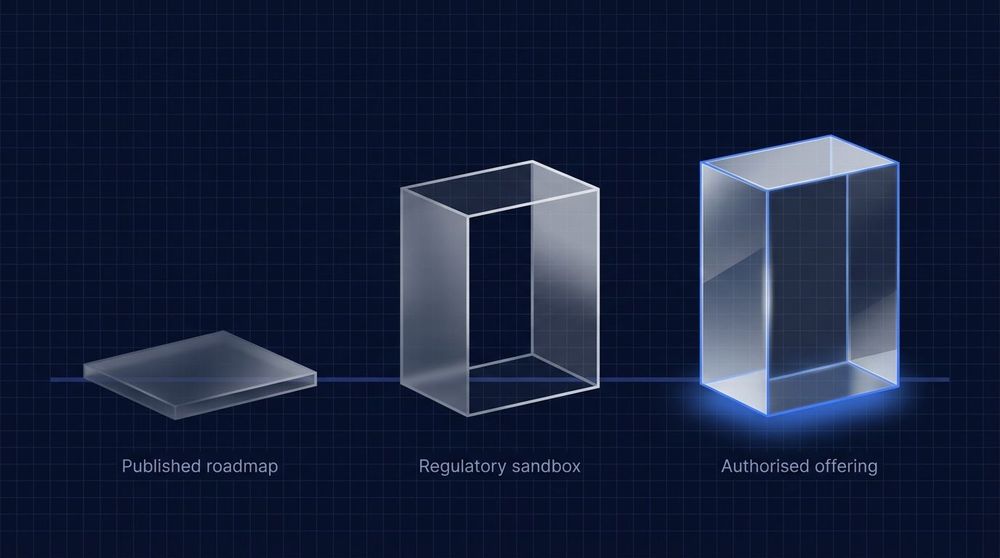
Southeast Asia has six regulators moving at six speeds. Two have authorized property-backed issuance under a national framework, and only Thailand has completed offerings.
Tokenized real estate is not real estate crowdfunding, and it is not a REIT share. Crowdfunding cuts a building into small claims the same way, and the dividing line is that crowdfunding keeps the register with the platform, while tokenization of real estate moves the register onto shared infrastructure.
Regional is the word doing the work, and it hides how three positions collapse into one. A published roadmap is a regulator stating an intention, as Thailand's strategic plan does. A regulatory sandbox is a controlled test with a named cohort and an end date, like the Philippine StratBox. An authorized offering is a licensed instrument under a standing framework, like a Thai portal offering.
A real estate token is the unit produced by that third position, and the mechanics are identical everywhere. Only the permission differs.
Six regulators, two frameworks, one record.
Why does Southeast Asia keep appearing on tokenization roadmaps?
Because the adoption data is extraordinary and has been for years.
In the Chainalysis 2025 Global Crypto Adoption Index, published 2 September 2025 and still current, Vietnam ranks fourth worldwide, the highest in Southeast Asia, with Indonesia seventh, the Philippines ninth, and Thailand 17th out of 151 countries. Yet Singapore and Malaysia, the region's most developed regulatory venues, are absent from the top 20. Grassroots adoption and institutional infrastructure sit in different countries.
The demand case has its own number. Philippine cash remittances hit a record US$35.634 billion in 2025 on Bangko Sentral ng Pilipinas data released in February 2026, equal to 7.3 percent of gross domestic product. Vietnam adds a lower entry point. Ho Chi Minh City apartments still trade well below Bangkok or Kuala Lumpur on a per-square-meter basis, though prices rose roughly 23 percent through 2025, so the gap is closing, per Global Property Guide.
The structural case has been true for a decade. The authorization record is thin and recent.
What do the market numbers actually show?
Four credible forecasts cover this category, and they disagree roughly eightfold on the same year.
- Deloitte, April 2025: US$4 trillion of tokenized real estate by 2035, from under US$0.3 trillion in 2024.
- McKinsey, June 2024: roughly US$2 trillion for all tokenized assets by 2030, calling real estate a slower-adoption class.
- BCG and ADDX, September 2022: US$16.1 trillion of hard-to-transfer assets by 2030, predating the crypto contraction.
- Ripple and BCG, April 2025: US$18.9 trillion of tokenized real-world assets by 2033, with property named a later-phase asset.
Now the on-chain reality. The tokenized real estate tracker showed $226.44 million of distributed asset value across 25 assets in seven countries as of 3 September 2026, against a whole-category total of $38.76 billion. Real-world asset tokenization of property is under six-tenths of one percent of everything on-chain, and none of it is Southeast Asian.
No credible institutional forecast exists for the tokenization of real estate in Southeast Asia. The regional numbers come from vendor reports, one stating a growth rate arithmetically impossible for what it projects.
Live offerings, nothing measured.
See how a coordination layer handles cross-border participation requirements at [mey.network](https://mey.network).
How does the region actually break down, market by market?
Sort the six by what the regulator has done, not what it has announced. Is tokenization legal for real estate in Southeast Asia? In two markets it is, under a named framework with a named instrument. In the other four it is sandboxed, drafted, or legal in principle only.
Pro tip: Everything below is current as of September 2026, and three of these regimes changed in the last 18 months. Confirm with the regulator.
Vietnam: the region's most explicit asset-backing mandate
Vietnam moved in the right order, which is rare. The Law on Digital Technology Industry took effect on 1 January 2026, defining digital and crypto assets as property under the Civil Code before any regime existed.
Resolution 05/2025/NQ-CP, effective 9 September 2025, then opened a five-year pilot. Article 5(2) requires crypto assets to be issued against real underlying assets rather than securities or fiat, a tokenization mandate in all but name, and real estate sits among the named target sectors. No other regulator in the region has written that requirement into national law.
The pilot's terms are specific, and international participants are the intended audience. Article 6(1) provides that crypto assets may be offered and issued only to foreign participants for the pilot's duration, and Decree 284/2026/ND-CP, effective 1 September 2026, penalizes a domestic participant acquiring tokens designated for foreign holders. The resolution sets no date for domestic access.
The licensing bar is set high deliberately. Minimum charter capital runs to VND 10,000 billion, roughly US$380 to 400 million, and no more than five providers may be licensed, which makes this an institutional regime by design. Five firms had cleared initial evaluation by 11 August 2026, a first stage that authorizes nothing on its own. No provider has been licensed.
Clearest mandate, highest bar.
Thailand: the only sustained record of property-backed offerings
Thailand regulated token offerings before almost anyone. The Emergency Decree on Digital Asset Businesses B.E. 2561 came into force on 14 May 2018, and offerings run through SEC-approved ICO portals, of which the register lists eight.
Then the rule nobody else mentions. Thailand's THB 300,000 retail cap is expressly waived for real-estate-backed offerings, so Thailand does not merely permit tokenizing real estate. It privileges property over every other token class.
The counterweight explains the small deal count. The property must be complete, the offering must carry at least 80 percent of project value, aggregate value must reach THB 500 million, and a trustee must hold the assets.
The record is named. SiriHub at THB 2.4 billion was approved on 22 May 2021, RealX listed at THB 2.4 billion on 25 September 2023, SiriHub2 reached THB 2.49 billion in December 2025, and KAVALON raised THB 400 million. Yet the SEC's own strategic plan puts total Thai ICO fundraising for 2024 at THB 1,444.9 million, under US$50 million.
Eight years of rules, four named deals.
Singapore: the deepest framework, the narrowest door
Singapore runs the region's most developed institutional tokenization work, in the open, through MAS. Project Guardian has run since 2022, and by MAS's November 2024 update it spanned more than 40 institutions across workstreams covering debt instruments, currencies, and asset and wealth management. Property appears nowhere in it.
Property tokenization here happens on private licensed platforms under general securities law. Fraxtor, ADDX, InvestaX, and SDAX all hold MAS Capital Markets Services licenses, and all four sit outside the program that generates the headlines. Fraxtor's minimum sits at S$25,000 as of ULI Asia Pacific's June 2025 review, ADDX opens primary issues from S$5,000, and accredited status starts at S$2 million in net personal assets.
Fraxtor structured a vehicle letting participants join the S$70.3 million Gloria Mansion acquisition in early 2022. What Singapore has demonstrated is access at issuance, not transfer activity afterward, and the ULI panel reviewing the sector called tokenization "a niche avenue for real estate investing, particularly in Asia Pacific."
Deepest framework, narrowest door.
Indonesia: the region's only retail sandbox graduate
Supervision of digital financial assets moved from Bappebti to the Otoritas Jasa Keuangan on 10 January 2025, under Government Regulation 49/2024 and OJK Regulation 27/2024.
The scope point matters more. POJK 27/2024 governs transaction activity, not issuance, so until the 2025 draft rules Indonesia had no issuance regime at all. Not banned, not regulated, not issuable at scale.
GORO became the first property tokenization platform to complete OJK's regulatory sandbox in mid-November 2025, having tokenized seven properties worth roughly IDR 42 billion at a minimum of IDR 10,000. Those seven properties come to roughly US$2.5 million, 30 times smaller than a single Thai offering.
The limitation sits in the rules to come. OJK is drafting real world asset tokenization rules for the third quarter of 2026, but its draft offering regulation names commodities, receivables, and rights to revenue streams as eligible. Land is not named among them. That follows Indonesian land law, and it is why efforts to tokenize real estate here rest on revenue rights.
Smallest deals, widest door.
The Philippines: the clearest demand case, nothing live
The Philippine SEC has a working framework. The Rules on Crypto-Asset Service Providers, MC 4 and MC 5 Series of 2025, took effect on 5 July 2025, requiring a registered local corporation, a staffed office, and PHP 100 million in paid-up capital excluding crypto assets.
The StratBox, opened to crypto-asset service providers on 16 April 2025, held four participants as of November 2025. One is testing tokenized real estate, and that participant has never been publicly named.
The intent is on record. Commissioner Rogelio Quevedo, at Philippine Blockchain Week in June 2026, said that the Commission is "now fully convinced that we have the proper law," and, of overseas workers, "they have the capital. They do not know where to place their money."
The rails exist already. The Bureau of the Treasury issued the country's first tokenized Treasury bonds on 22 November 2023, raising PHP 15 billion against a PHP 10 billion minimum, then extending to retail through GBonds. No publicly named live tokenized real estate offering exists here yet.
Best demand case, zero live offerings.
Malaysia: fractional property without tokens, tokens without property
Malaysia's regulated digital asset regime explicitly excludes tokenized instruments. The Guidelines on Recognized Markets, effective 20 May 2026, state that digital assets "do not include tokenized securities, such as tokenized shares, tokenized debentures and tokenized funds." Property-backed tokens fall outside that regime, governed by their underlying instrument.
The offering route exists, and it is narrow. The Guidelines on Digital Assets permit issuance through registered IEO platforms, capped at RM100 million a year and RM2,000 per issuer for retail, and registration is closed to new applicants.
Here is the differentiated finding. Malaysia already regulates fractional property ownership without tokens. The Property Crowdfunding framework, in the Guidelines since May 2019, covers completed residential property up to RM500,000, restricted to Malaysians occupying it as a first home. No blockchain appears in it.
Malaysian momentum sits in debt instruments, with Khazanah Nasional leading the first tokenized sukuk on 28 April 2026. KLDX lists Prime Real Estate Securities as upcoming, not live.
Two regimes, neither for property.
What happened to Southeast Asia's first wave of tokenized property?
Every published article on this topic looks forward. Several regional offerings have run a full cycle, and nobody has written what happened.
Start with SiriHub. Approved on 22 May 2021, it raised THB 2.4 billion from more than 6,000 subscriptions, backed by the Siri Campus offices with MFC Asset Management as trustee. At wind-up, the asset was appraised at THB 2,660.2 million, and the owning company was disposed of at THB 2,400 million, the senior tranche holding first claim on THB 1,600 million.
One disclosure detail makes the story. SPV77's own filing with the Thai SEC modeled a downside scenario in which the junior tranche would not be made whole. The issuer's site publishes nothing about how the project ended.
Then the twist. The same building was offered again as SiriHub2 in December 2025 at THB 2.49 billion, under a new owner, in an offering that was oversubscribed and closed early. One asset, tokenized twice, inside four months. That is the honest shape of Thai property tokenization, recycling one building rather than scaling.
RealX supplies the pricing evidence, raising exactly its THB 2.4 billion minimum against a THB 3.5 billion maximum and falling as much as 23 percent intraday on debut.
Vietnam's pre-regulation wave shows why frameworks matter. Vietnam Investment Review reported in July 2023 that the country's fractional and tokenized property platforms had faded, with Moonka suspending fundraising after three projects and Revex halting operations. Both predate any framework, and Vietnam now writes the region's most explicit rules for the same activity. Singapore supplies a rare exit price because CitaDAO took 18 Sin Ming Lane off-chain in August 2023 at US$604,000 against a US$635,000 tokenization value. Globally, RealT, which raised roughly US$140 million across 700 mostly Detroit properties, entered liquidation on 2 July 2026, with payments halted from late 2025.
The counterweight matters. No Southeast Asian regulator has taken enforcement action against a licensed tokenized property offering. The failures were unlicensed platforms fading away, not licensed ones shut down, which is the strongest argument here for domestic licensing.
Pro tip: Ask an issuer what it published at maturity, not what it promised at launch.
Read the protocol documentation at [docs.mey.network](https://docs.mey.network).
Why do the region's flagship tokenization programs exclude real estate?
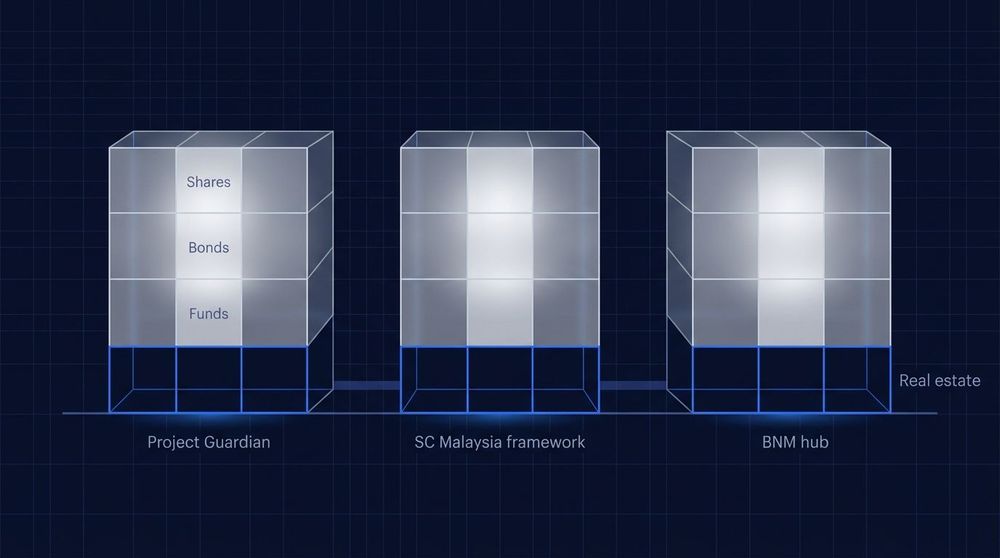
Three flagship programs run across two of the region's most advanced markets, and not one covers property. Project Guardian's workstreams stop at debt instruments, currencies, and asset and wealth management. Securities Commission Malaysia's proposed framework for tokenized capital market products, consulted on in mid-2025, covers tokenized equity, bonds, and funds. Bank Negara Malaysia's Digital Asset Innovation Hub, announced 17 June 2025, covers wholesale payments.
So why does real estate asset tokenization keep getting left out? Because bonds and funds already carry standardized documentation, established custody, and a single legal owner. Property carries a land registry, a title system, and a foreign ownership regime that no ledger can absorb. Real estate asset tokenization arrives last because regulators start where the asset is already abstract.
Three programs, zero property.
Can a token authorized in one ASEAN country be offered in another?
No, and no mechanism to do so exists.
The only passporting arrangement here is the ASEAN CIS Framework, launched in 2014, with four signatories out of 11 members. It makes no mention of digital assets or tokenization, and the ASEAN Capital Markets Forum's Action Plan 2026 to 2030 announces no recognition mechanism either.
The Asian Development Bank's assessment is the authoritative version. Its 2024 Cross-Border Settlement Infrastructure Forum brief says that most ASEAN+3 economies "have just begun to discuss national legal definitions for digital assets" and that "there appears to be no universal definition."
Eleven members, four signatories, zero tokens.
How is the Southeast Asian path different from the Gulf model?
The comparison people reach for is Dubai, and the useful dimension is not ambition. It is who controls the land record.
Centralization of the land registry. In the Gulf, the Dubai Land Department itself launched the region's first government-backed tokenized real estate project through Prypco Mint on 25 May 2025, at an AED 2,000 minimum, targeting 7 percent of Dubai's market by 2033. In Southeast Asia, the land record sits with six national registries under six legal traditions. The Gulf model cannot scale beyond one registry. The Southeast Asian model cannot move at the speed of one.
Useful rather than flattering. The Dubai pilot took a land registry, a central bank, a virtual assets regulator, and a government sandbox, and still produced a residents-only, dirham-only program. The detail sits in our Dubai breakdown.
One registry scales faster. Six registries scale further.
What are the challenges and limitations?
Start with the constraints tokenization cannot touch. Thailand caps foreign holdings at 49 percent of unit space in a condominium and bars foreign land ownership. The Philippine Constitution reserves private land for entities at least 60 percent Filipino-owned, with a 40 percent ceiling on foreign interest in a condominium. Vietnam caps foreign ownership at 30 percent of apartments in a building, and Indonesia bars foreigners from freehold.
Tokenizing a building does not enlarge the foreign quota. It divides the same quota more finely.
Three further limits compound that. No regional regulator recognizes an instrument authorized under another's regime, so cross-border reach is a marketing claim rather than a legal status. Where projects report at all, they report at launch. And tokenization compresses the paperwork layer, not the slow one.
One pattern is documented and worth acting on. A platform claims reach across five countries, holds a license in none, and publishes projections while conceding it is unlicenced where the property sits.
Compliance is not optional. It is your first line of defense against fraud.
The risk sits in the unlicensed layer, which our breakdown of risks, protections and red flags covers in depth.
How should a participant evaluate a Southeast Asian offering?
Five questions, in this order, each disqualifying a different kind of offering.
1. Which regulator licenses this operator, and for what activity? A license to run a digital asset platform is not a license to issue property-backed instruments, and in Malaysia the two sit in different regimes. Check the register, not the website.
2. Where does the underlying title sit, and who holds it? An entity off-chain holds the legal relationship to the building, and in Thailand a trustee is a statutory requirement. Ask for its jurisdiction and registration number.
3. Is this authorized, sandboxed, or announced? Ask for the instrument number and its date, and treat a roadmap citation as a red flag. A plan is not a permission.
4. Are you inside the eligible class, and does the foreign ownership cap reach you? That question disqualifies more readers than any other here. A Vietnamese resident cannot hold a Vietnamese-issued token during the pilot.
5. What happens if the operator fails, and what gets published at the end? Ask who holds custody, under whose rules, and what the issuer must disclose at maturity.
Run those five against any tokenized real estate platform, and most fall at question one or four. The step-by-step version sits in the participation process.
Pro tip: Get that instrument number in writing, then find it on the regulator's own site before going further.
Walk through [the participation requirements on mey.network](https://mey.network).
What is the future of tokenized property in Southeast Asia?
The first genuinely cross-border regional offering will come from whichever regulator solves recognition of another jurisdiction's instrument, not from whichever market has the most activity. If Thailand's portal regime scales to serve three neighboring countries without a recognition agreement, we were wrong, and a forecast that cannot be wrong is not analysis. Two milestones are worth watching because OJK's tokenization rules are targeted for the third quarter of 2026 and Vietnam's first provider license could arrive at any time, with five applicants already through initial evaluation.
No regional regulator publishes how many participants these offerings reached, how many units moved afterward, or how the assets performed. Everyone writing about this region reads announcements rather than outcomes, this article included.
Our perspective
The regional opportunity is real. The narrative runs about two years ahead of the rulebooks, and that gap is where participants get hurt.
The first wave proved the mechanism works and left almost no public record of how it ended, the finding we put above every forecast here. A second wave should be judged on what it publishes at maturity, not at launch.
Mey Network is ecosystem infrastructure, with Mey Fi as the protocol layer and Mey Real as the property surface. Our parent, Meey Group, sits in Vietnam, the market that wrote the region's most explicit asset-backing rule and reserved the pilot for international participants. Watching a framework take shape from inside the country it governs shapes how we read the rest.
Six regulators, six answers, one building tokenized twice. Ask what each offering published at the end, and the map redraws itself.
Explore it as part of your own research at [mey.network](https://mey.network).
Frequently asked questions
What is tokenized real estate?
Tokenized real estate is property represented as digital units on shared infrastructure, where each unit records a claim on one identified building. The boundary against real estate crowdfunding is where the register sits because crowdfunding keeps that register with the platform, while tokenization places it on infrastructure several parties can read.
How does real estate tokenization work?
A vehicle holds legal title to the property, that vehicle issues units against it under a regulator-approved instrument, and the units are recorded on shared infrastructure so transfers settle without a paper handover. Almost none of that work happens on-chain, and the full sequence sits in our step-by-step breakdown.
Is real estate tokenization legal in Southeast Asia?
Legality is per-jurisdiction rather than regional. Thailand authorizes property-backed offerings through SEC-approved ICO portals, and Vietnam permits asset-backed issuance under Resolution 05/2025/NQ-CP while restricting it to foreign participants. Indonesia, the Philippines, Singapore, and Malaysia each permit narrower activity under different regimes, and none of the four matches Thailand's completed record.
How to tokenize real estate?
Tokenizing real estate is an issuer question rather than a participant one, and the answer is regionally specific. In Thailand it starts with an SEC-approved ICO portal and an appointed trustee, in Singapore with a Capital Markets Services license, and in Vietnam with VND 10,000 billion in charter capital.
Which Southeast Asian country is furthest ahead on tokenized property?
Thailand, plainly. It has the longest-running regime, dating to 2018, the only completed property-backed offerings, and a rule expressly privileging real-estate-backed tokens by waiving the retail participation cap. Singapore leads instead on institutional framework depth, which is a different thing and should not be confused with a completed record.
Can a foreign participant access a Southeast Asian tokenized property offering?
It depends on the country, and the answer is more nuanced than most coverage allows. Thailand permits foreign participation in its token offerings, and Vietnam reserves its pilot for foreign participants, though no provider is licensed there yet. The binding constraint is usually the foreign ownership cap on the property.
Does Vietnam's Resolution 05/2025/NQ-CP cover tokenized real estate?
Yes in principle, though nothing has been issued under it yet. The resolution requires crypto assets to be issued against real underlying assets and names real estate among its target sectors, which makes it the region's most explicit legal mandate for tokenizing property. Article 6(1) restricts the pilot to foreign participants.
Has any tokenized property project in Southeast Asia failed?
Yes, and almost nobody publishes this. Vietnamese platforms suspended operations before any framework existed, a Singapore asset was taken off-chain below its tokenization value, and a Thai listing fell sharply on its debut. No regulator in the region has shut down a licensed property offering, which is why licensing matters.
How much tokenized real estate actually exists?
Very little, and the number is the story. The rwa.xyz tracker recorded $226.44 million across 25 assets in seven countries on 3 September 2026, against $38.76 billion for the whole tokenized asset category. None of those 25 assets sits in Southeast Asia, while the forecasts for this decade run into the trillions.
What is Mey Network's role in the region?
Mey Network is ecosystem infrastructure, with Mey Fi as the protocol layer and Mey Real as the property product surface. Its parent company, Meey Group, is based in Vietnam. Mey Network operates in a region where most regulatory doors remain closed and claims no access that does not yet exist.
Related Reading
- What Is Real Estate Tokenization? The 2026 Participant Guide
- How Real Estate Tokenization Works: A Step-by-Step Breakdown
- Dubai Real Estate Tokenization: Participating On-Chain
- Is Tokenized Real Estate Safe? Risks, Protections and Red Flags
- A Step-by-Step Guide to Property Token Participation for Beginners
